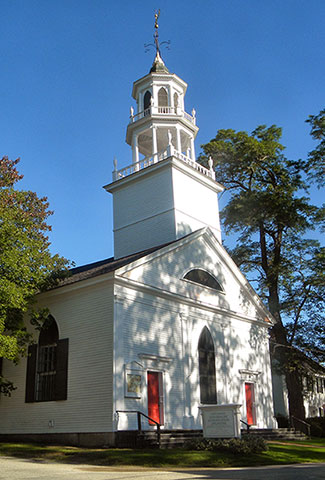

Change and Wonder
Call to Worship by Kathleen Jesse Raine
Change
Said the sun to the moon,
You cannot stay.Change
Says the moon to the waters,
All is flowing.Change
Says the fields to the grass,
Seed-time and harvest,
Chaff and grain.You must change, said,
Said the worm to the bud,
Though not to a rose,Petals fade
That wings may rise
Borne on the wind.You are changing
said death to the maiden, your wan face
To memory, to beauty.Are you ready to change?
Says the thought to the heart, to let her pass
All your life longFor the unknown, the unborn
In the alchemy
Of the world’s dream?You will change,
says the stars to the sun,
Says the night to the stars.
Chalice Lighting words by Howard Zinn who wrote,
“To be hopeful in bad times is not…foolishly romantic; it is based on the fact that human history is a history of not only cruelty, but of compassion, sacrifice, courage, kindness. And if we do act, in however small a way, we don’t have to wait for some grand utopian future —- the future is an infinite succession of ‘presents,’ and to live now as we think human beings should live, in defiance of all that is bad around us, is itself a marvelous victory.”
Blessed are the Flexible, for they shall not be bent out of shape. (not sure who said this)
Meditation – “In-betweenness” by Michelle LaGrave
We—you and I—are in-between right now
In-between what was and what will be.
In-between who we were and who we will become.
In-between letting go and embracing.
In-between saying hello and saying goodbye.In-betweenness, it’s a thing.
In-betweenness is a time of fullness.
A time of anticipation.
A time of hope.
A time of worry.
A time of sadness.In-betweenness is a time of waiting.
Waiting for news.
Waiting for departure.
Waiting for arrival.
Waiting for death.
Waiting for life.In-betweenness is a time of transformation.
A time of reflection.
A time of action.
A time of growing.
A time of becoming.
Reading – “The Tide Rises, the Tide Falls” by Henry Wadsworth Longfellow
The tide rises, the tide falls,
The twilight darkens, the curlew calls;
Along the sea-sands damp and brown
The traveller hastens toward the town,
And the tide rises, the tide falls.Darkness settles on roofs and walls,
But the sea, the sea in the darkness calls;
The little waves, with their soft, white hands,
Efface the footprints in the sands,
And the tide rises, the tide falls.The morning breaks; the steeds in their stalls
Stamp and neigh, as the hostler calls;
The day returns, but nevermore
Returns the traveller to the shore,
And the tide rises, the tide falls.
Sermon – “Change and Wonder”
I have long accepted a portion of the wisdom of the Greek philosopher Heraclitus, who said that “All things are in motion, and nothing is at rest.”
Heraclitus taught that “everything flows” and that change is the fundamental, constant essence of the universe, and that stability is merely an illusion.
After 77 years, I am beginning to accept that. Heraclitus illustrated this with his claim that it is impossible to step into the same river twice. Today, those who study the universe know better than most that everything, everything, is predicated on change.
Knowing that, I am still challenged by all the changes swirling around us.
Once upon a time, I felt like an early adapter. I easily switched from studying to be an engineer to studying to become a minister.
I managed to transfer from the Lutheran ministry to the UU Ministry without a hitch.
I thought I was pretty cool when I bought a Kaypro II computer, back in the early 1980s, when I was the Minister here. Ironically, the Kaypro company was too slow to adapt to the changing computer market, and it faded from the mainstream before the end of the decade.
Again, I felt like I was an early adopter when I bought this (show and tell) large Cell phone, the size of a lunchbox; it could hold 50 of our present-day cell phones.
Then I used a Palm Pilot for a decade.
And now, we all carry around cell phones that have more capabilities than all the things I just mentioned.
And now, AI has arrived. Surely, everything technologically is predicated on change.
As Henry Wadsworth Longfellow wrote:
The tide rises, the tide falls,
The twilight darkens, the curlew calls;
Along the sea-sands damp and brown
The traveller hastens toward the town,
And the tide rises, the tide falls.
Living along the Maine coast where the tides range from 9 -18 ft, helps us understand that there is something quite powerful about the rising and falling of tides.
Longfellow was born in Portland, ME, and had a respect for the persistent regularity of the changing of the tide when he used it as a powerful metaphor: And the tide rises, the tide falls.
The older I have gotten, I realize I don’t like change, even knowing about the tides. I wear clothes for years, until my wife suggests they are getting a bit worn and should be replaced. I still have my father’s wool coat, and he died in 1989. I have several sweaters from the 70’s. Wearing them is like coming back year after year to old friends that make me feel at home. It is like coming to Castine to preach.
But, I know, change is inevitable. We all change in many ways. All those technological gadgets that I mentioned worked for me & for others for a while. And I know that we have to accept that we and the people we know and love will change. When I remind myself of that fact, it helps me make room for growth and change. It doesn’t mean I always like the changes or will easily accept them.
Another New England Poet, Robert Frost, wrote the short poem, “Dust of Snow.” Even in July, it speaks to me when struggling with change.
The way a crow
Shook down on me
The dust of snow
From a hemlock tree
Interestingly, the crow, the hemlock tree & the dust of snow all symbolize a certain amount of negative energy. Frost, standing under the hemlock tree, saw the crow landing above him shake down a chilly dusting of snow. Frost later indicated that the day had not gone well. And I can imagine that some of that snow could easily have fallen down the back of his coat as it has for me when walking among snow-covered trees.
It sure doesn’t seem like a positive experience. And yet, despite everything, the experience caused a shift in Frost’s mood.
[It]
Has given my heart
A change of mood
And saved some part
Of a day I had rued.
Many drastic changes are happening in our country and our world right now, which are challenging us to the core. I listen to the news and shake my head and utter expletive-deleted words. As a country, our leaders used to cooperate, trust, and actually speak nicely to our close democratic allies, even when disagreeing with them on some policy.
And at the same time, our leaders used to speak and act skeptically and guardedly toward some of the more cruel and authoritarian countries. Now, we see “our” President antagonize our closest allies; he acts belligerently toward small and defenseless countries while being cooperative, trusting, and speaking positively toward some of the most cruel and authoritarian countries of the world.
That and the deadly violence being used by masked federal agents on American citizens, last winter in Minnesota and more recently in Texas, and then in Biddeford, ME. It is hard to make sense of it all, and yet…
The tide rises, the tide falls,
The twilight darkens, the curlew calls;
Along the sea-sands damp and brown
The traveller hastens toward the town,
And the tide rises, the tide falls.
Interestingly, the Curlew has a ghost-like call. And hearing the curlew’s call has meant bad luck and possible doom. The poem obviously carries a less than positive or promising message of change & a sense of Profound vulnerability.
Concerning vulnerability, Tania Israel, a professor of psychology, wrote about a time she was talking with her therapist about opening herself up to vulnerability. Tania said to her therapist that she “…didn’t mind being vulnerable as long as (she) knew the other person would be warm, that they wouldn’t judge and all of that.”
Her therapist immediately chimed in, “That’s not vulnerable. Being vulnerable means taking off our armor and going in not knowing how we’ll be received, but putting ourselves out there a little bit anyway.”
The therapist’s words spoke to Tania, and her words speak to me. Change removes our armor, strips off our comfortable old coat, and suddenly we become vulnerable to what is coming next.
What comes next can be good, or it can be bad.
The tide rises, the tide falls.
Change forces each of us into the world of the unpredictable. Change forces us to face an unknown future, where we don’t know what comes next.
Change can be a powerful and discordant force, but experiencing change can – just possibly – enable us to see things from a different & maybe a better perspective than what we had been seeing. Seeing our world from a new perspective can potentially bring about within us a sense of wonder and the possibility of seeing things more accurately.
We can be lulled into complacency. Society can go along for years, seeming to remain stable and giving us the illusion that things aren’t changing. But many small, subtle changes, when constantly happening, can slowly build up until there is a tipping point where we suddenly realize that the very ground beneath has shifted.
Recognizing all this doesn’t immediately make me comfortable. The changes happening in the world and happening within my personal life can still feel threatening. Just last Winter, Alison and I made a huge change in our lives, triggered by many small changes, both promising changes and challenging changes.
On the positive side last January, Charlotte, our youngest daughter, had her 2nd baby, our 2nd grandchild. We felt the tug of wanting to be near this next generation.
On the challenging side, as we have gotten older, both of us are experiencing some health concerns. Unfortunately, medical care and doctors in general have become harder to find, for us, here in Downeast Maine. So in the face of “The tides rising and the tides falling,” we decided to move to Pennsylvania, part-time.
This puts us closer to our grandchildren and closer to more abundant medical care. So, we are familiar with an influx of changes, as we learned to live in our new little house down in Doylestown, PA, complete with plumbing repairs, electrical issues, and a leaking oil tank. And yes, all those changes caused us to feel vulnerable without any armor.
Something that has helped me is that I recently discovered the concept of disruptive wonder, the inspiration for this sermon. That combination of words: disruptive wonder, was 1st coined, as far as I know, by Kelli Anderson, a graphic artist.
She posits that disruption enables us, if not forces us, to see the world from a different perspective. When seeing things from a different perspective, there is the possibility, not the guarantee, but the possibility of seeing a new and hopeful future.
We can have moments of wonder because we are seeing things from a more promising perspective. This is when we can be surprised with wonder.
The way a crow
Shook down on me
The dust of snow
From a hemlock treeHas given my heart
A change of mood
And saved some part
Of a day I had rued.
This sense of wonder can help us better understand how change and wonder work on us and those around us. Wonder can bring with it a desire to better understand and embrace the world. This is where our own evolution comes into play. Changes motivate choices based on observations of the world changing around us, beneath us, and within us. Observing these changes can bring – may bring an accompanying sense of wonder about what is happening, wonder about how things work, and wonder about how we can evolve, survive, and thrive in the changing world.
The sense of wonder brings with it an amazement and a desire to better understand what is happening.
It is important to remember that the world is understandable even when it may seem like a major mystery.
Joseph Campbell wrote,
“There is no security in the call to adventure. It is less exciting if you know what the outcome is going to be. To refuse the call to enter the next stage means stagnation. You enter the forest at the darkest point where there is no path. The very cave you are afraid to enter (can) turn out to be (the) source of what you are looking for. The purpose of the journey is compassion. The return is seeing the radiance everywhere.”
You and I, we as a community, must realize that our future is strengthened by our commitment to hold each other in a loving community during this time of change even as we fully acknowledge our imperfections.
The whole world is in a major time of transition. Our country as a democracy is in transition. Our state is in transition. We as individuals are in transition. Change and Wonder can help us hold each other in loving community as we work together for a better world.
Closing Words – T. S. Eliot, “Four Quartets, Section V.”
What we call the beginning is often the end
And to make an end is to make a beginning.
The end is where we start from. …
We shall not cease from exploration
And the end of all our exploring
We will arrive where we started
And know the place for the first time.
